Your Questions, Answered
-
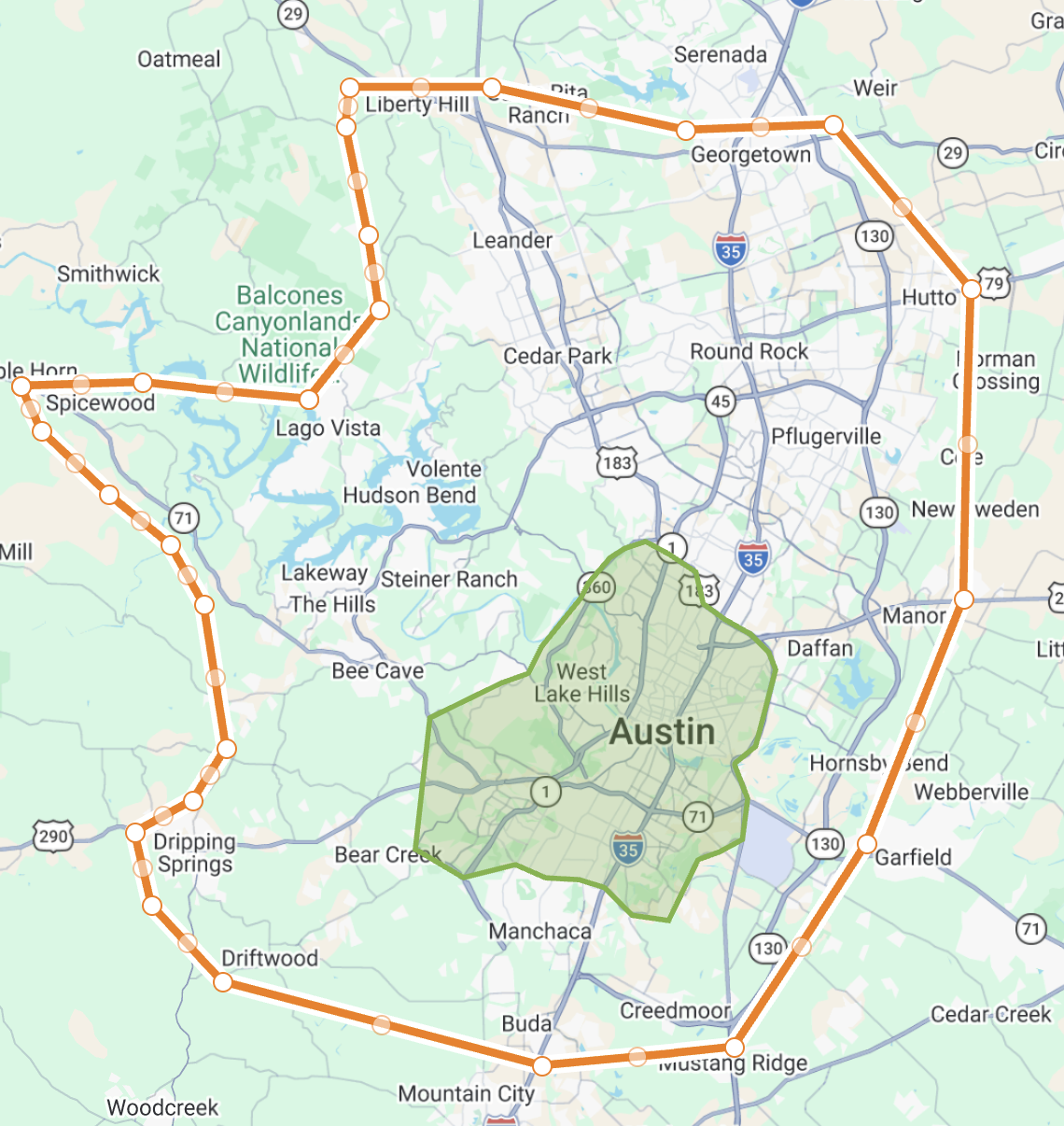
StillPoint currently serves the Austin area, and will consider visits to Dripping Springs, Lakeway, Bee Cave, Buda, Cedar Park, Leander, Spicewood, Round Rock, Hutto, Bee Cave, Driftwood, Lago Vista, Buda, Manor and Pflugerville on a case-by-case basis as scheduling allows. Addresses outside of the standard service area (see map) may require an additional travel fee.
Virtual care is offered anywhere in Texas! -
In Texas, you can see a physical therapist for evaluation and treatment for up to 30 consecutive calendar days without a referral from a physician. This allows you to get immediate help for your symptoms without the delay of a doctor’s visit first.
While physical therapists are highly trained to identify "red flags" and will refer you to a specialist if your evaluation suggests a condition requiring further medical testing, you should seek immediate emergency medical care (call 911 or go to the ER) if your dizziness is accompanied by sudden weakness, sudden hearing loss, slurred speech, double vision, a severe headache, or a loss of consciousness.
For less urgent but persistent symptoms, you may still choose to schedule a visit with your primary physician in addition to your physical therapy for comprehensive medical oversight.
-
StillPoint specializes in the evaluation and treatment of dizziness, vertigo, balance, and related symptoms. Common conditions we work with include:
Benign Paroxysmal Positional Vertigo (BPPV)
Vestibular neuritis and labyrinthitis
Pre- and post-operative rehab for vestibular (acoustic) schwannoma
Persistent dizziness or PPPD
Post-concussion dizziness and balance issues
Balance difficulty
FND (Functional Neurologic/Movement Disorders)
Motion sensitivity and visual dizziness
Gait instability and fall risk
Cervicogenic (neck-related) dizziness
Dizziness related to migraine or inner ear disorders
Every person’s symptoms are unique, and not all dizziness has a single clear cause. If we determine that your symptoms fall outside the scope of physical therapy, or would be better addressed in collaboration with another provider, we’ll help guide you toward appropriate next steps.
-
StillPoint accepts medicare (part B), but otherwise is an out-of-network provider, which means we do not bill insurance directly. This allows us to provide highly personalized care without the restrictions that often come with insurance-based treatment — such as limited visit time, requiring a physician’s visit (and referral) prior to initiating care, authorization delays, etc.
Many of our clients choose this private-pay model because it allows for faster access and more individualized approach to care. We can provide a detailed receipt (superbill) that you may submit to your insurance company for possible out-of-network reimbursement, depending on your plan. We also accept HSA and FSA payments.
If you have questions about whether this approach is right for you, I’d be happy to talk through your options.
-
Yes! StillPoint is a participating provider serving Medicare part B beneficiaries. We are working on being able to bill Medicare advantage plans as these are managed by commercial carriers such as Aetna, BCBS, Humana, etc, but give us a call if you’re unsure or have questions.
-
Most clients are able to be seen within 48 hours. Because StillPoint is a small, focused practice, scheduling is more flexible and responsive than traditional clinic-based care that tends to be more volume-focused. Need after-hours care? Reach out and let’s find a time that works.
If you’re dealing with dizziness or balance issues, response time matters. Seeing you quickly is always a priority.
-
Visits generally last about 60-minutes, which allows time for thorough assessment, education, and individualized care without the rush.
Number of visits varies greatly depending on what condition is being addressed. For example: positional vertigo is generally resolved within 1 or 2 visits, while other conditions may require 4 or more sessions. If a longer plan of care is anticipated, you will know this early on, and we can plan, package, or pivot accordingly to maximize value and outcomes, even if it means pairing you with another provider.
-
A StillPoint is a place of calm control—where you feel grounded and steady. For people dealing with dizziness or balance problems, that sense of stability can feel elusive. Our goal is to help you find your StillPoint through a supportive, empowering approach that helps you feel more stable, confident, and in control of your movement again.
Service Area
Standard Service Area: Inner green area (self-schedule available)
Extended Service Area: Outlined by orange boundary (Subject to travel fee. Please call to schedule)